1
2
3
4
5
6
7
8
9
10
11
12
13
14
15
16
17
18
19
20
21
22
23
24
25
26
27
28
29
30
31
32
33
34
35
36
37
38
39
40
41
42
43
44
45
46
47
48
49
50
51
52
53
54
55
56
57
58
59
60
61
62
63
64
65
66
67
68
69
70
71
72
73
74
75
76
77
78
79
80
81
82
83
84
85
86
87
88
89
90
91
92
93
94
|
'''
一个区块的结构
{
"index":0, //索引
"timestamp":"", //时间戳
"proof":"", //工作量证明
"transactions":[ //交易
"sender":"", //交易发出者
"receiver":"", //交易接收者
"amount":5, //交易金额
],
"prehash":"", //前一块区块的hash值
}
'''
import hashlib
import json
import time
class BlockChain:
def __init__(self):
self.chain = []
self.current_transactions = []
self.new_block(proof = 100, pre_hash= 1)
def new_block(self, proof, pre_hash = None):
block = {
'index':len(self.chain) + 1,
'timestamp': time.time(),
'transactions':self.current_transactions,
'proof':proof,
'pre_hash':pre_hash or self.hash(self.chain[-1])
}
self.current_transactions = []
self.chain.append(block)
return block
def new_transactions(self, sender, receiver, amount) ->int:
self.current_transactions.append(
{
'sender':sender,
'receiver':receiver,
'amount':amount
}
)
return self.last_block['index'] + 1
@staticmethod
def hash(block):
block_sring = json.dumps(block, sort_keys=True).encode()
hashlib.sha256(block_sring).hexdigest()
@property
def last_block(self):
return self.chain[-1]
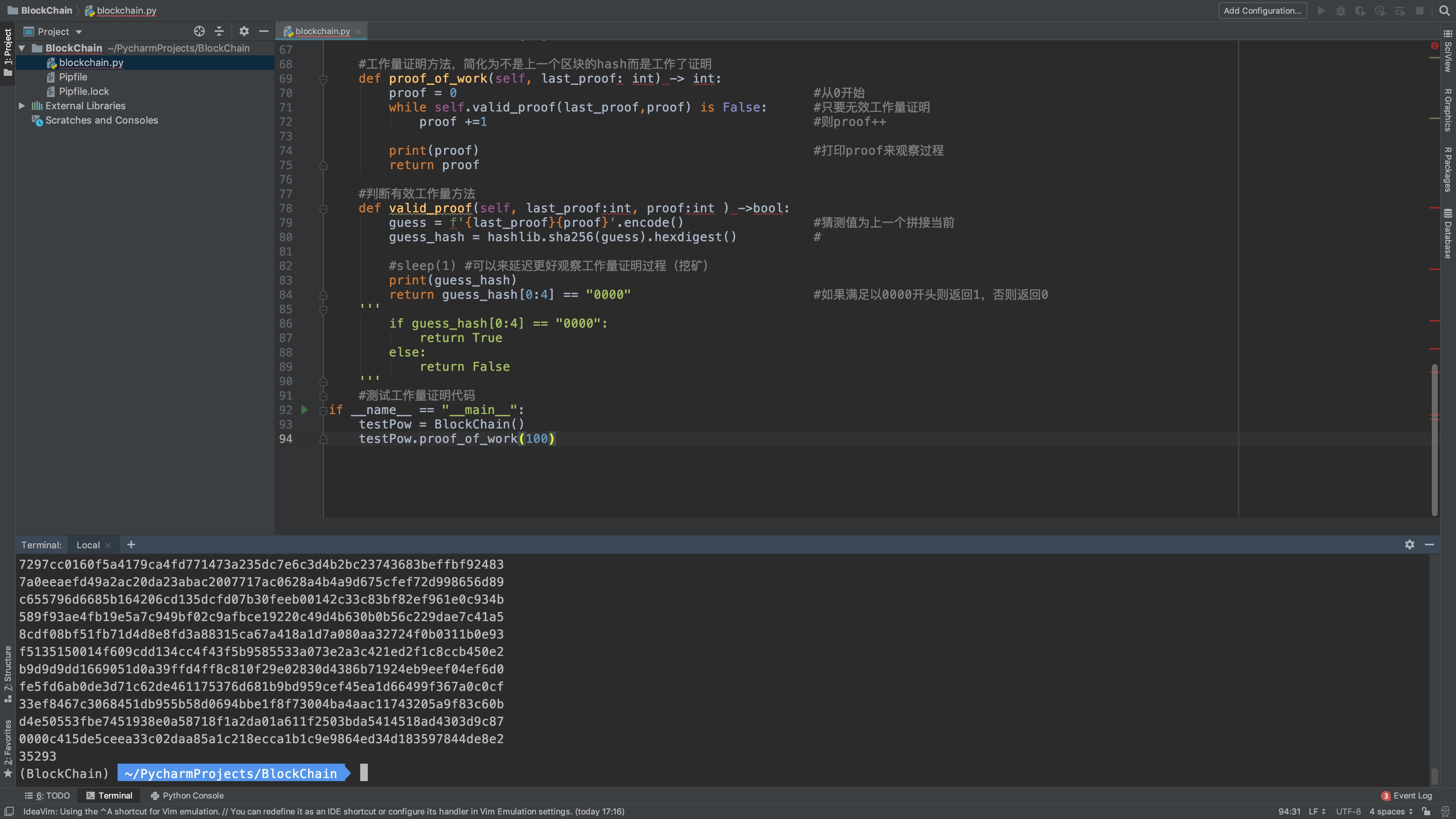
def proof_of_work(self, last_proof: int) -> int:
proof = 0
while self.valid_proof(last_proof,proof) is False:
proof +=1
print(proof)
return proof
def valid_proof(self, last_proof:int, proof:int ) ->bool:
guess = f'{last_proof}{proof}'.encode()
guess_hash = hashlib.sha256(guess).hexdigest()
print(guess_hash)
return guess_hash[0:4] == "0000"
'''
if guess_hash[0:4] == "0000":
return True
else:
return False
'''
if __name__ == "__main__":
testPow = BlockChain()
testPow.proof_of_work(100)
|